100 hands
I believe in responsible consumption and handmade enhancing lives and environment. To that end, I have deep respect for the work of Uzramma https://malkha.in/, the good design award in Japan https://www.g-mark.org/about/, Archana Shah’s endeavours https://www.bandhej.com/ and many more. As individuals, our actions can make a difference, but always in the context of a bigger picture and the 100 hands that bring us to a certain point.
I am grateful to many who made the following projects possible.
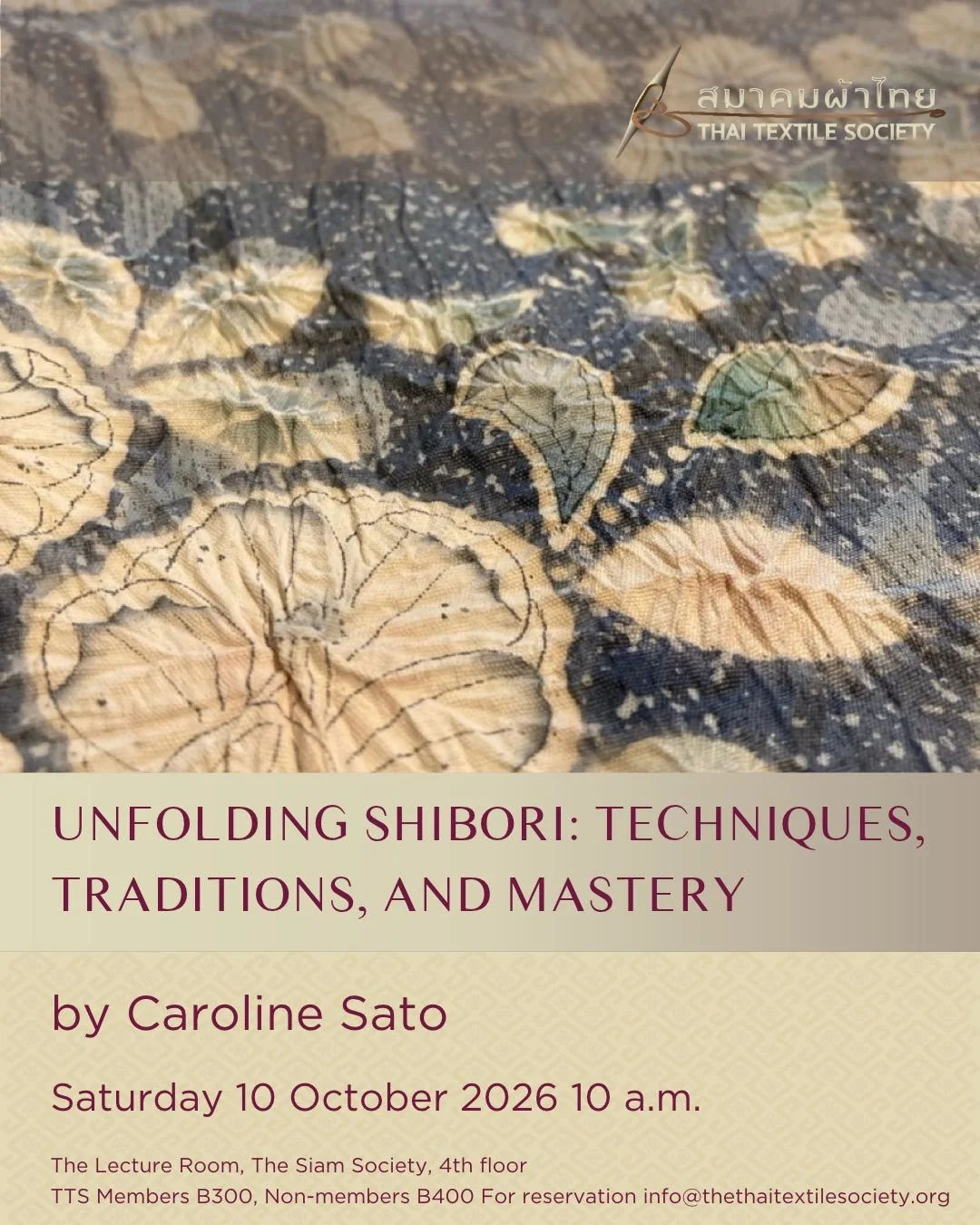
Unfolding Shibori: Techniques, Traditions, and Mastery
Across Asia, the art of resist-dyeing has produced a wide spectrum ranging from simple to technically complex textile traditions. While Japanese shibori is globally celebrated for its distinctive patterning, the mastery of the craft lies in an extraordinary variety of physical manipulations. Caroline Sato will highlight the core techniques of traditional Japanese shibori. To contextualize shibori within the wider Asian context, the lecture will offer a comparative summary of regional resist-dyeing traditions. She will detail the aesthetic boundaries that distinguish Japanese shibori from Chinese zha ran, Indian bandhani and leheriya, and Indonesian pelangi and jumputan. The primary objective of the session is to equip attendees with the visual and analytical tools needed to differentiate between these regional styles, while fostering a deeper appreciation for the specialized skills, patience, and mastery by artisans in each region.
Following the lecture, Thai Textile Society members are invited to participate in a complimentary hands-on orizome experience. Orizome is an art of folding and dip-dyeing paper, applying resist principles, allowing members to experiment and take home their own creations.

How old is my Kimono?
This talk, for the inaugural London Textile Month, traces the shifting meaning of luxury in kimonos throughout the 20th century, revealing how textile technology, economic change, and evolving social values shaped the garments and their cultural significance. Reading list

Immigration Museum of Tokyo workshop
Mini me: A workshop for children with non-Japanese roots and their perceived identity by the Immigration Museum Tokyo

20th Century Fashions in Kimono
A lecture at the Siam Society, Bangkok, filmed by Thai PBS


Colours of friendship
Exhibiting a diverse body of work from foreign wives from all over Japan

It is not a cultural showcase, but a window to the soul
Immigration Museum Tokyo at the Tokyo Biennale 2023


Christmas Market
Orizome notebooks for sale at the Tokyo American Embassy 9-10 Dec 2022


30 minute milestones: Caro Lion's sketch sprints
Reflections on 18 months participating in sketch sprints in a flip book.


Shibori.Bandani
Empowering women? A talk by Caroline Sato for AFWJ - Association of Foreign Wives of Japanese.

Shibori in Kimono
Shibori in Kimono; A Japanese aesthetic. Talk and Exhibition by Caroline Sato.
Special thanks to Dr Deborah Thiagarajan for the initial idea of this exhibition and Sarath Nambiar and Gita Husdon and staff of Dakshina Chitra for making this exhibition possible. We are displaying kimono from the collections of Karen Uchiyama, Hellen Honda Collinson and last but not least, Harumi Matsushita who has also kindly lent her heirloom and masterpiece to be displayed only for today.

Yokoso
20th Century Fashions in Womens Kimono
Presentation by Caroline Sato MA fashion from RMIT University Australia

Gond Art private viewing with Padmaja
Padmaja Shrivastava brings her collection of Gond art from Bihar to Chennai.

Children’s Art
Children’s Art Exhibition and Sale.
10% donated to Hand in Hand. This organisation aims to stop child bonded labour by economically empowering women.